Crankshaft Rear Seal with Retainer Plate: Removal
WARNING: This page is about a different variant/trim than selected.
NOTE:
During engine repair procedures, cleanliness is extremely important. Any foreign material, including any material created while cleaning gasket surfaces that enters the oil passages, coolant passages or the oil pan, may cause engine failure.
- 1.
With the vehicle in NEUTRAL, position it on a hoist. REFER to Jacking and Lifting .
- 2.
Remove the flexplate. Refer to Flexplate .
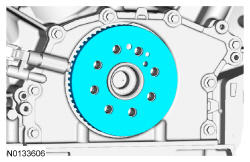
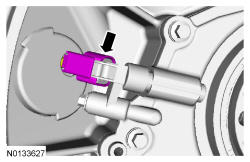
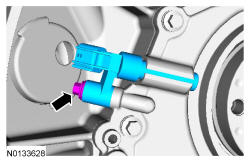
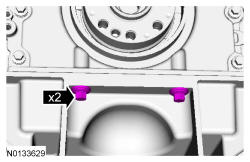
- 7.
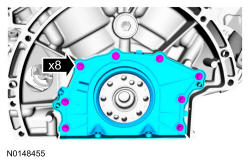
Remove the 8 bolts and the crankshaft rear seal retainer plate.- Discard the plate and seal assembly.
- 8.
Clean the sealing surfaces of the cylinder block and oil pan flange in the following sequence.- 1.
Remove any large deposits of silicone or gasket material.
- 2.
Apply silicone gasket remover and allow to set for several minutes.
- 3.
Remove the silicone gasket remover. A second application of silicone gasket remover may be required if residual traces of silicone or gasket material remain.
- 4.
Apply metal surface prep to remove any remaining traces of oil or coolant and to prepare the surfaces to bond. Do not attempt to make the metal shiny. Some staining of the metal surfaces is normal.
- 1.
NOTE:
Do not use wire brushes, power abrasive discs or 3M™ Roloc ® Bristle Disk (2-in white, part number 07528) to clean the sealing surfaces. These tools cause scratches and gouges that make leak paths. They also cause contamination that will cause premature engine failure. Remove all traces of the gasket.
NOTE:
Place clean, lint-free shop towels over exposed engine cavities. Carefully remove the towels so foreign material is not dropped into the engine. Any foreign material (including any material created while cleaning gasket surfaces) that enters the oil passages or the oil pan, may cause engine failure.