Rear Brake Pads: Removal
WARNING:
Before beginning any service procedure in this service information, refer to SAFETY WARNINGS
NOTE:
Do not spill brake fluid on painted or plastic surfaces or damage to the surface may occur. If brake fluid is spilled onto a painted or plastic surface, immediately wash the surface with water.
NOTE:
Do not allow grease, oil, brake fluid or other contaminants to contact the pad lining material, or damage to components may occur. Do not install contaminated pads.
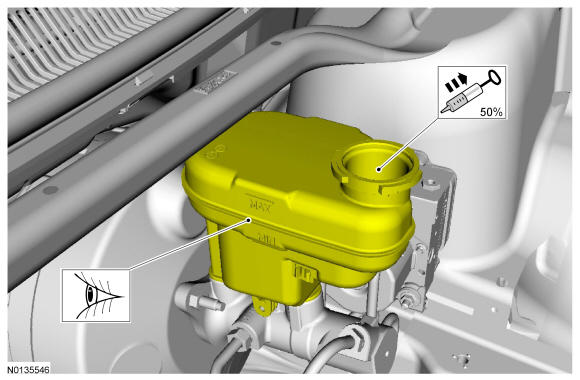
- 1.NOTE: The master cylinder reservoir should be half full to avoid overflow when the brake caliper pistons are retracted.
Visual check. Extract the fluid with a syringe.
- 2.
Remove the wheel and tire. For additional information, REFER to REFER to Wheels and Tires .
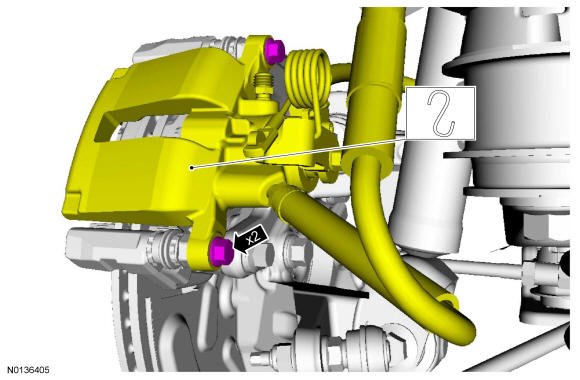
- 3.NOTE: Use hand force and a rocking motion to separate the brake caliper from the brake pads.NOTE: Care must be taken when servicing rear brake components without disconnecting the parking brake cable from the brake caliper lever. Carefully position the caliper aside using a suitable support or damage to the parking brake cable end fittings may occur.NOTE: Do not allow the caliper to hang from the brake hose or damage to the hose may occur.
Relocate and support the component.
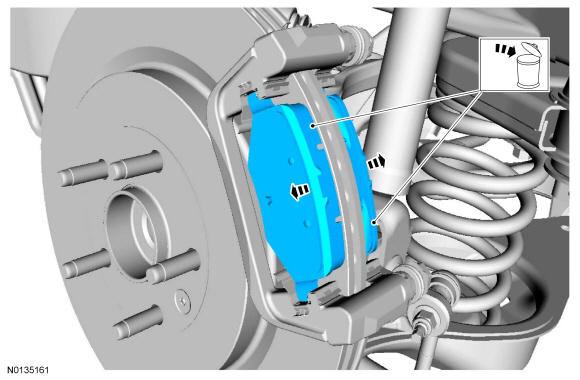
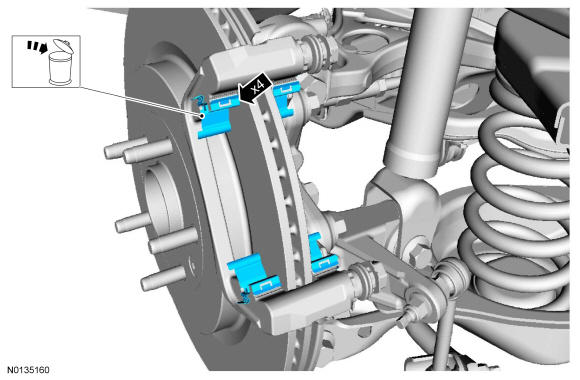
- 4.NOTE: Brake pads with adhesive on the insulator are one-time use only. When the brake pads are separated from the brake caliper, new brake pads must be installed to prevent brake noise and shudder.NOTE: For 345 mm (13.5 in) brakes, note the orientation of the inner and outer brake pads for reference during installation. Outer brake pads will have OTR stamped on the top of the backing. Inner brake pads (Police vehicles only) will have INR stamped on the top of the backing.
Discard the specified component. Follow local disposal regulations.