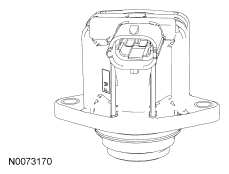
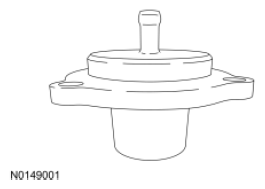
Turbocharger Bypass Valve
The turbocharger bypass valve prevents back flow through the turbocharger when the throttle is rapidly closed to avoid undesirable noise. The high pressure downstream of the turbocharger is vented back to the intake air upstream when the turbocharger bypass valve is open reducing pressure in the system.
There are three types of turbocharger bypass valves currently in use.
The first type of turbocharger bypass valve is solenoid controlled and located between the turbocharger intake and the turbocharger boost pressure output to the charge air cooler (CAC).
The second type of turbocharger bypass valve is solenoid controlled and is integrated in the turbocharger housing. The operation of the turbocharger bypass valves that are solenoid controlled is similar.
The third type of turbocharger bypass valve is an electropneumatically controlled system, integrated in the turbocharger housing, that consists of a pneumatically controlled turbocharger bypass, a vacuum source from the vacuum pump, a control solenoid for vacuum and pressure, and the tubing.