Remanufactured Powertrain Core Returns (24-7049)
WARNING: This page is about the Explorer Base, 2.0L Eng VIN 9, which is a different variant/trim than selected.
Publication date: 2024-05-16Reference number: 24-7049
REMANUFACTURED POWERTRAIN CORE RETURNS
TECHNICAL SERVICE BULLETIN
Reference Number(s): 24-7049, Date of Issue:
May 16, 2024
| FORD: | All Models |
SUMMARY
This bulletin provides tips to assist the dealership when returning powertrain cores back to Ford Motor Company.
SERVICE INFORMATION
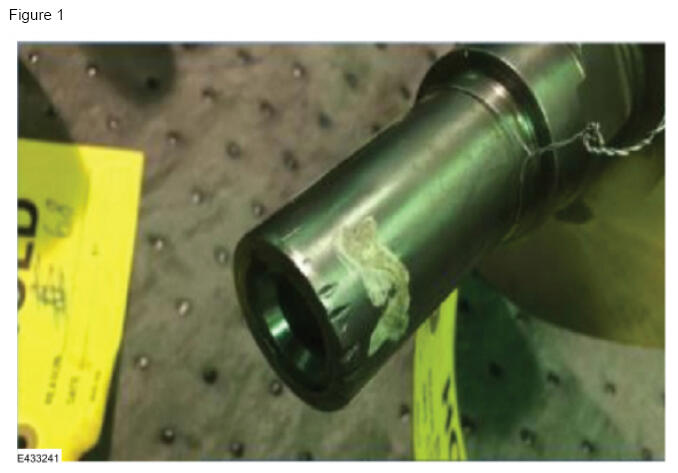
Mishandled Core:
- Powertrain installers and facilities can reduce mishandled cores. Example: a pipe wrench was used and damaged the crankshaft. (Figure 1)
- No usable core means no remanufactured service engines or transmissions for repairs.
Correct powertrain handling is vital:
- Handle securely to avoid impact damage.
- Loosely reassemble to prevent further component damage.
- Return all pieces/parts (cam and main bearing caps, valvetrain , oil filter adapter, etc.)
- Reassemble all parts back in their correct locations and not just thrown in the box (cam and main bearing caps, etc.)
- Avoid poor storage that could cause rust or further damage (poor weather conditions, etc.)
As the Warranty and Policy Manual requires, the dealer is to follow the Warranty Parts Return Procedures.
- Cleaned and drained of all fluids
- Reassembled and complete
- Package in the same container which held the replacement part
Core return issue:
- Damage parts
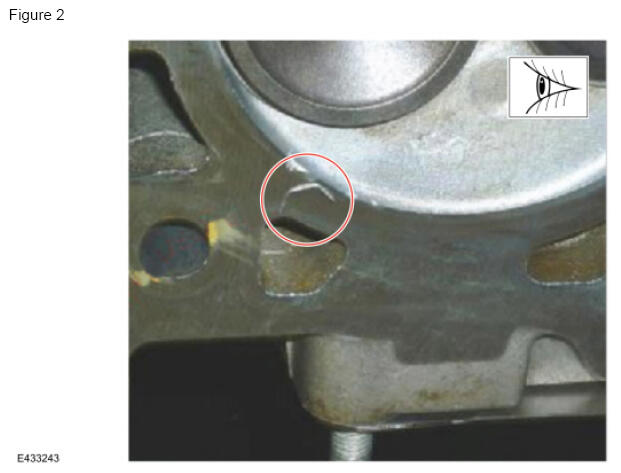
- handle the entire cylinder head with care. Excessive damage cannot be machined. (Figure 2)
- Protect sealing surfaces - treat like a wet painted surface.
- Missing parts
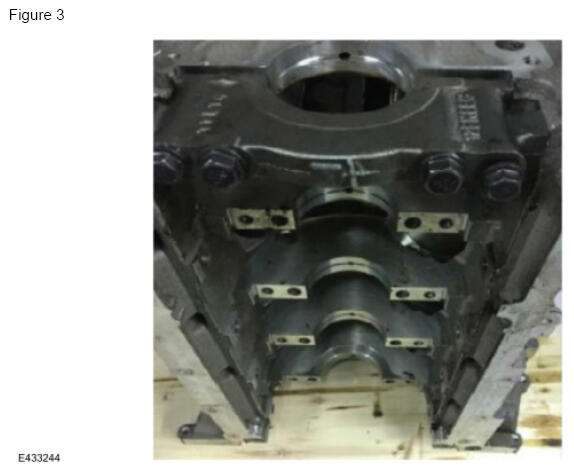
- return all pieces. Ford cannot merely replace the bearing cap (line bore). (Figure 3)
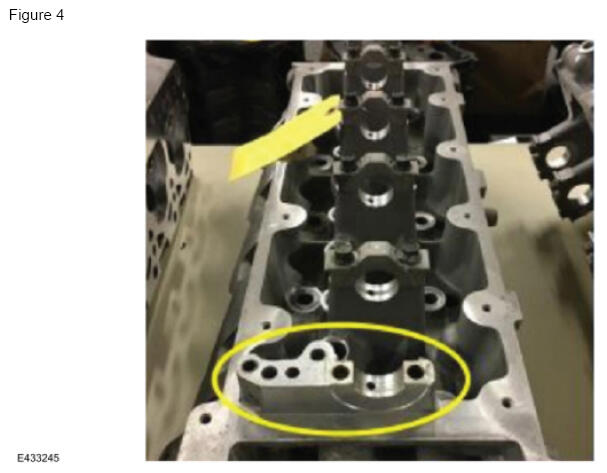
- Missing only one cam cap is a big issue resulting in scrap of the cylinder head. (Figure 4)
- Mishandling components
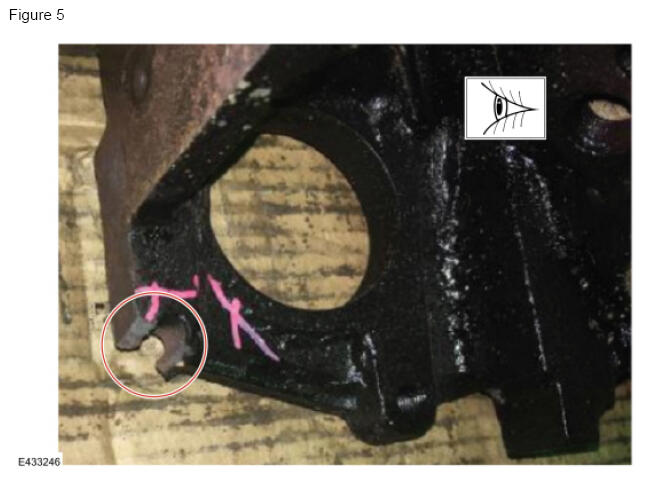
- engine block impact damage results in engine scrap (Figure 5)
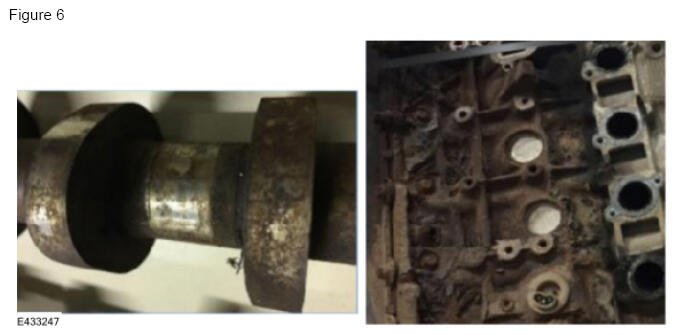
- Rusted parts
- rust at this point cannot be removed. Cores left unprotected such as outside storage become scrap. (Figure 6)
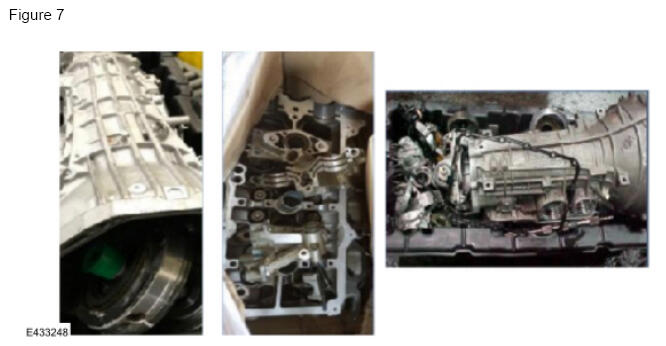
- Shipping care
- reassembly is important. Engines and transmissions are both affected. (Figure 7)