Leather/Vinyl Seat Cover (18-7042)
Reference number: 18-7042
LEATHER/VINYL SEAT COVER
TECHNICAL SERVICE BULLETIN
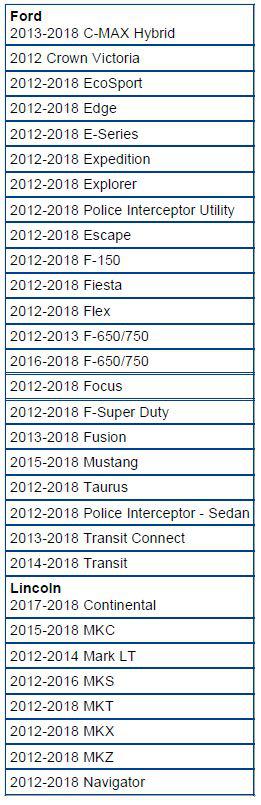
| FORD: | See model list below |
| LINCOLN: | See model list below |
MODEL
SUMMARY
This article supersedes GSBs G0000006, G0000129 and G0000131.
Use this document to assist in determining warrantable/non warrantable decision regarding leather/vinyl seat covers.
SERVICE INFORMATION
Warrantable Repair (repair is required instead of replacement)
- Split seams caused by loose or broken thread must be re-sewn.
-
NOTE: Exception to this policy is front seat back covers that have side airbags. Per Workshop Manuals these cannot be repaired.
-
- Loose trim cover "J" clips should by secured by either reattaching or alternative means (e.g. adhesive, screw, etc.).
- Trim covers that are loose/misaligned must be corrected through adjustment, which includes complete removal and installation to ensure all attachments are secured/aligned.
Non-warrantable Conditions
- Burns, soil marks, cuts, scratches, scuffs, tears, or punctures by foreign objects that occur after new vehicle delivery.
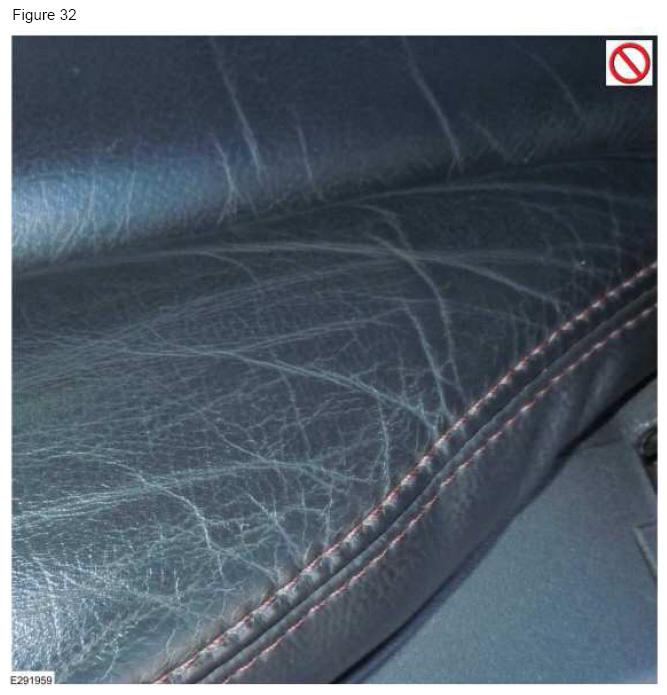
- Leather/Vinyl character lines/wrinkles.
- Leather natural markings (scars less than 3mm x 100mm in length) (3/32"x 3 & 15/16")
- Cloth normal deterioration and wear e.g. minimal nap crush.
- Dye transfer from customer clothing to the seating surface.
- Damage due to chemicals, solvents, or use of non-Ford approved cleaners (see Owner's Manual).
- Do not place heavy objects on the seat.
- Do not operate a heated seat if water or any other liquid spill on the seat.
- On vehicles equipped with seat-mounted airbags, do not use chemical solvents or strong detergents. Such products could contaminate the side airbag system and affect performance.
- Household cleaning products or glass cleaners will damage covers, please see the Owner's Manual for approved cleaners.
Warranty Defects (requires replacement)
- Split seams caused by material tears, loose thread tension, broken thread, or elongated needle holes.
- Leather russet visible (sub-surface leather when topcoat is removed) and leather top coat peel.
- Cloth pile yarns missing and cloth excessive nap crush.
- Sub-surface wear through caused by seat structure, springs, wires.
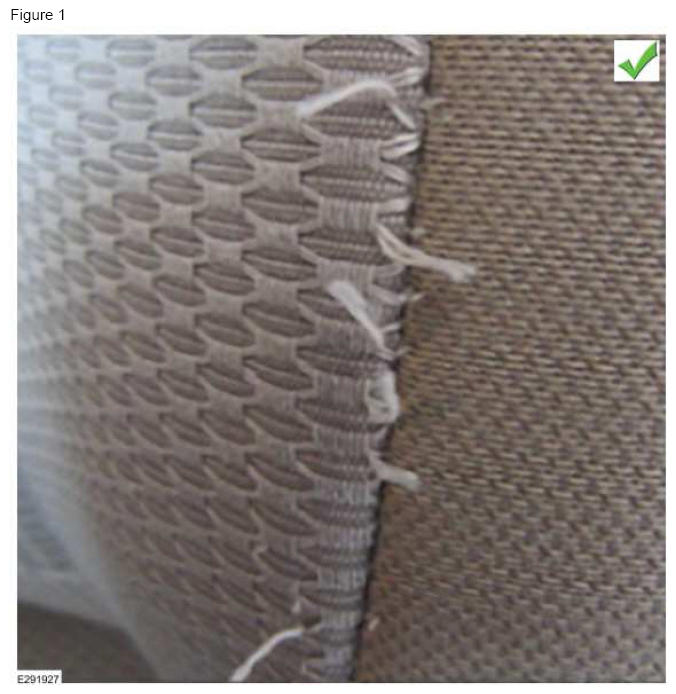
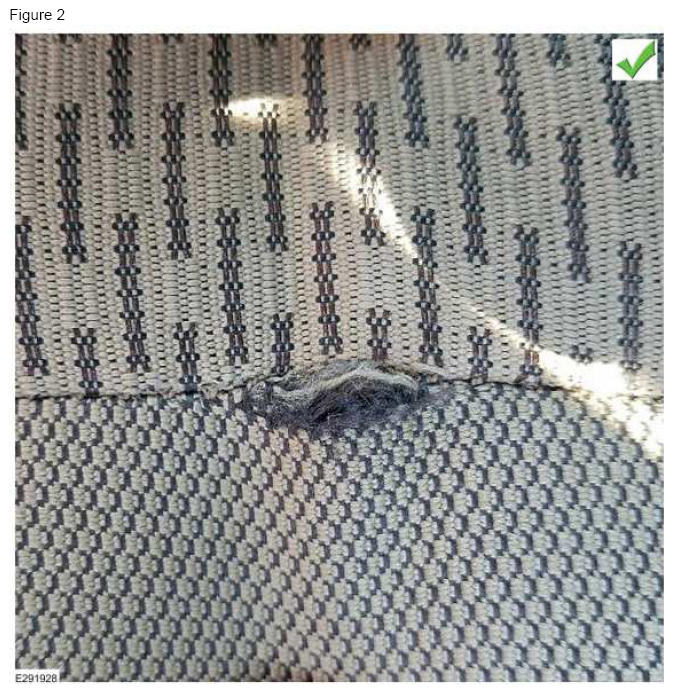
LOOSE THREAD AT SEAM (WARRANTABLE)
Frayed/unraveled material near a seam requires replacement. (Figures 1 - 2)
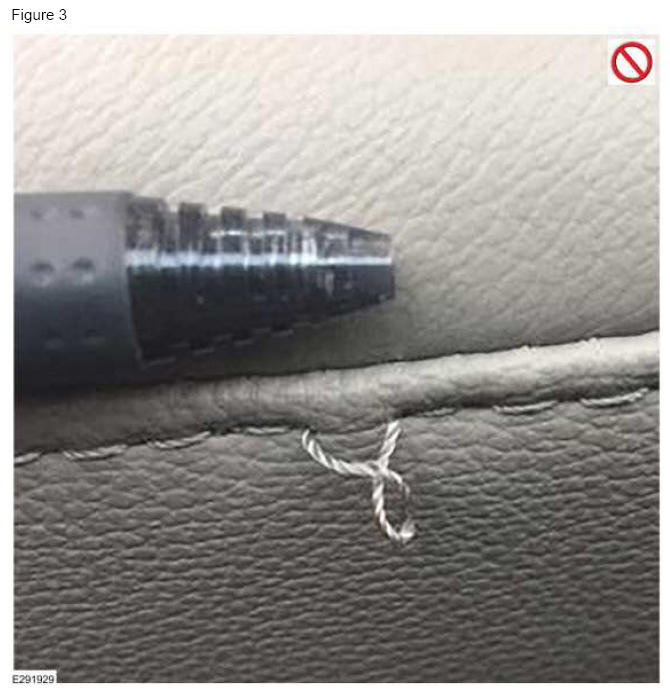
LOOSE THREAD AT SEAM (NON-WARRANTABLE)
Snags noted by pulled thread on each side (may/may not be broken thread). (Figure 3)
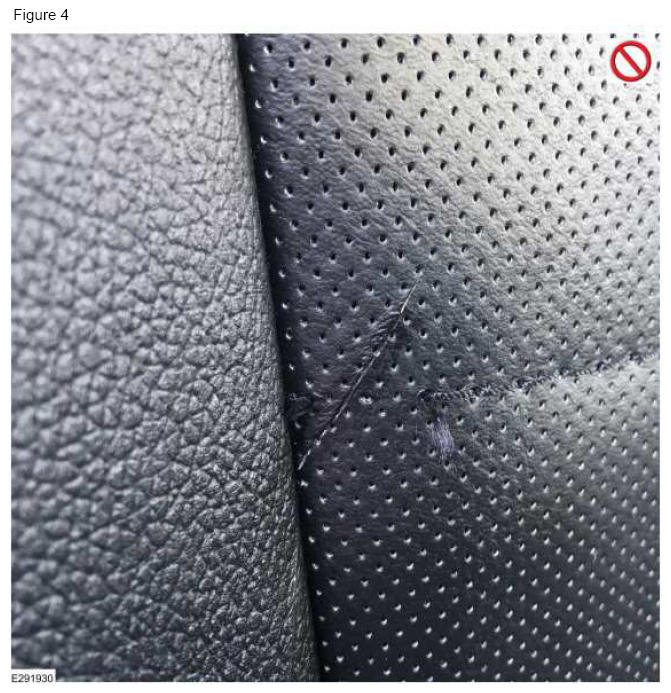
Split seam with associated damage. (Figure 4)
SPLITS AND CUTS (WARRANTABLE)
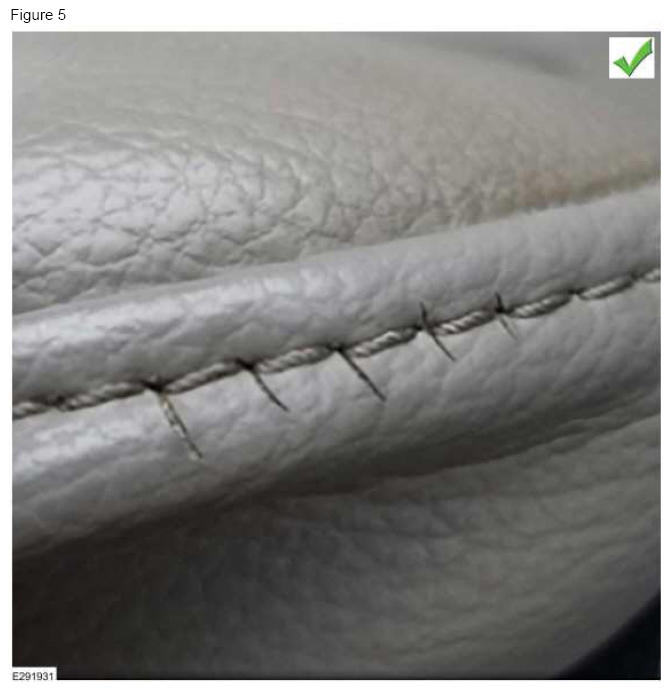
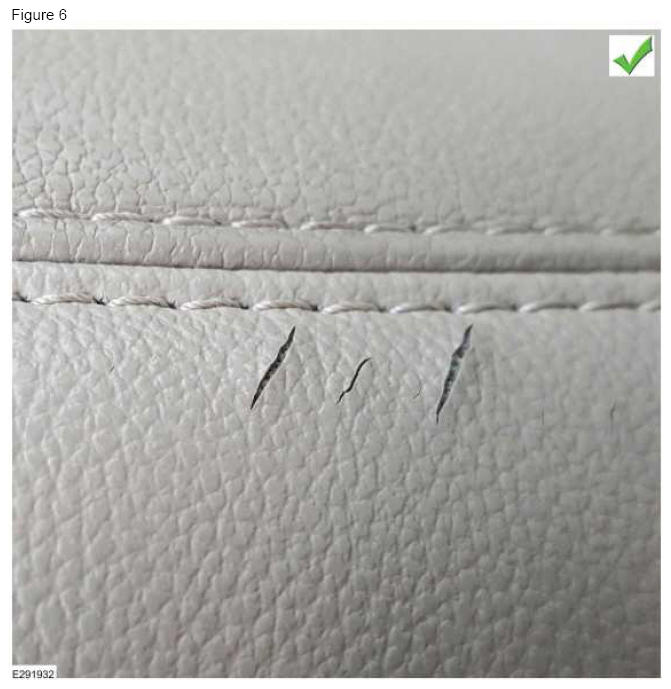
Splits will follow the grain and show vinyl substrate. (Figures 5 - 6)
SPLITS AND CUTS (NON-WARRANTABLE)
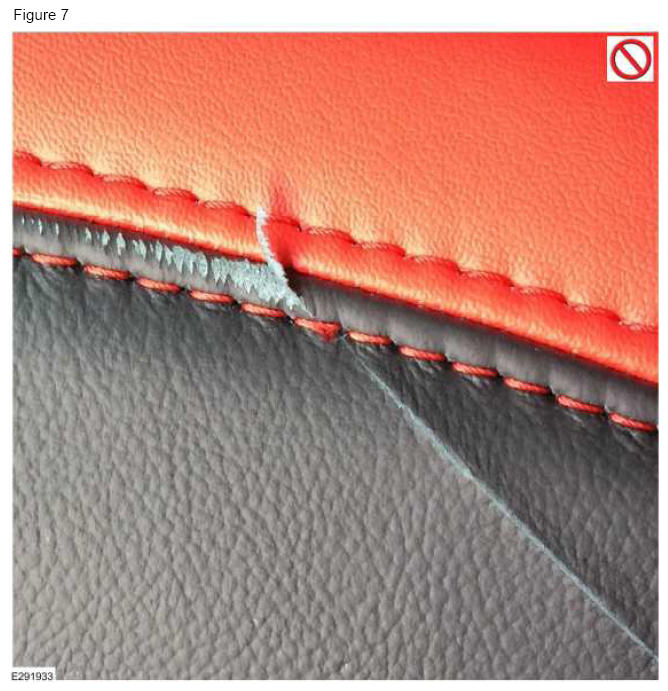
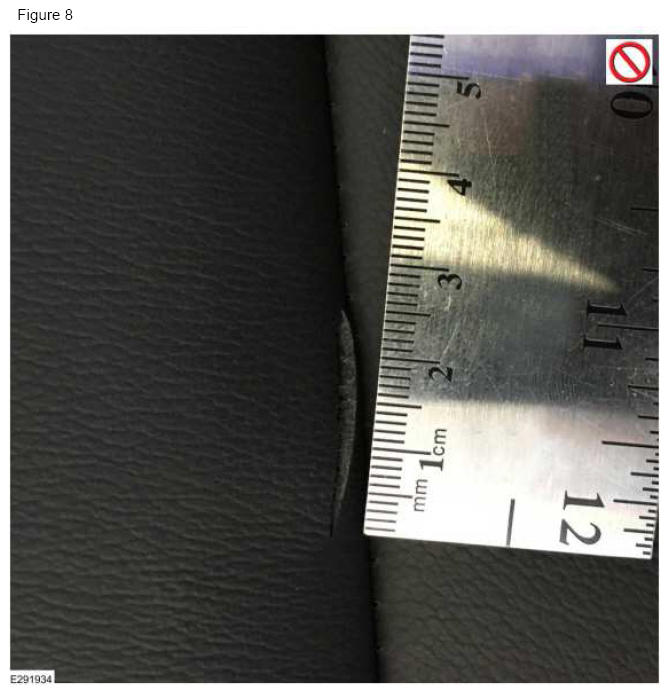
Straight cuts with stutter marks or sharp points. May also cross multiple panels. (Figures 7 - 8)
WEAR AND ABRASION (WARRANTABLE)
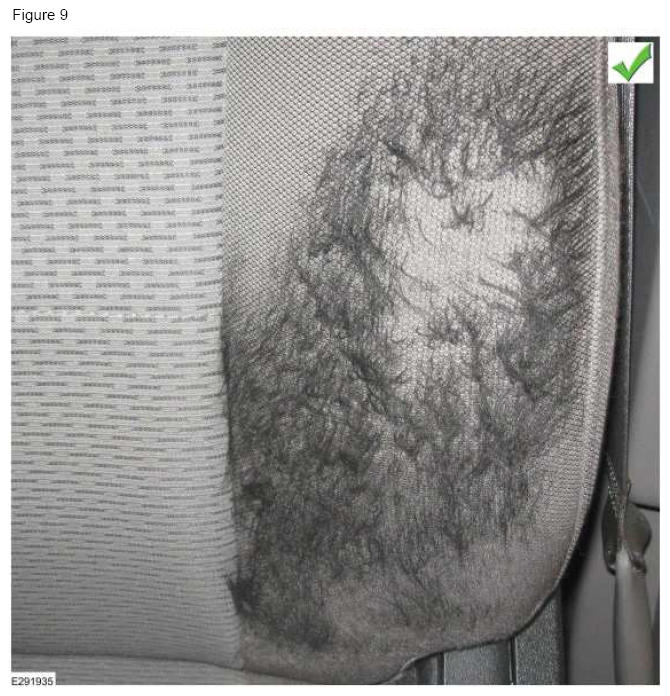
Frayed, fuzzy, pilling appearance from normal wear. (Figure 9)
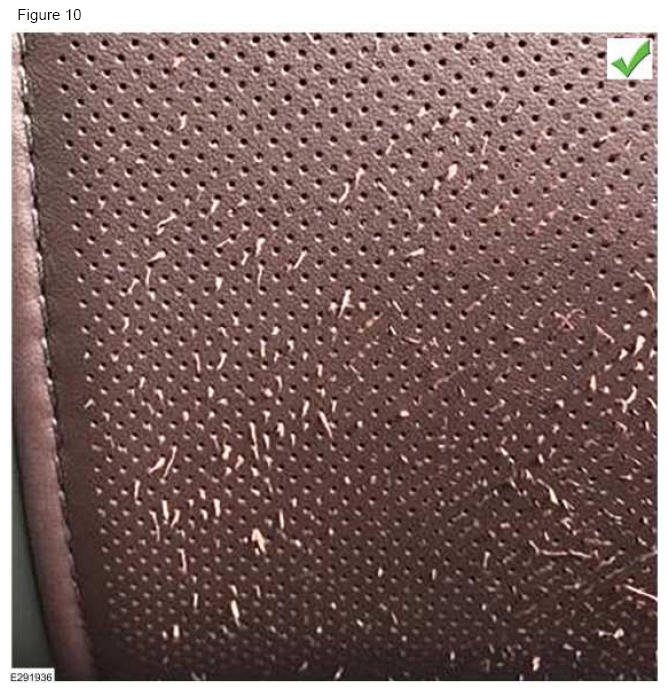
Bearding will come through perforations from wear on the backside. (Figure 10)
WEAR AND ABRASION (NON-WARRANTABLE)
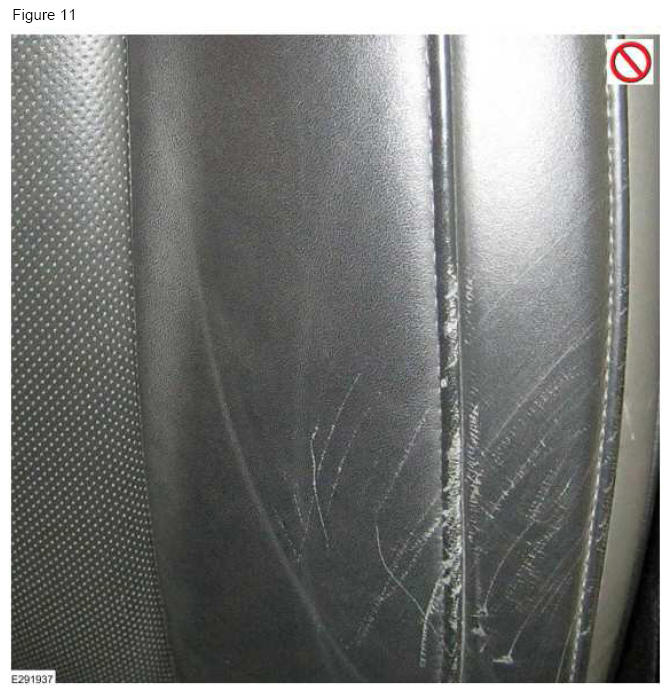
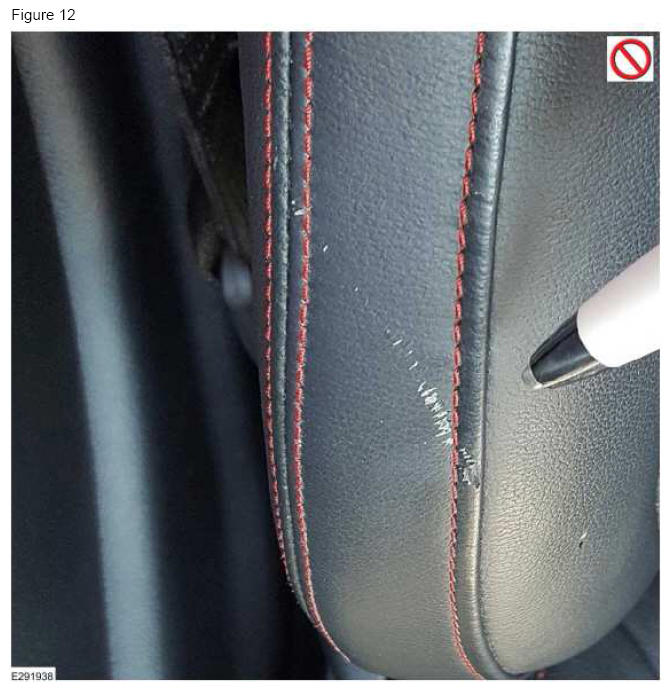
Chips, scratches, abrasion, stutter marks. (Figure 11 - 12)
SCARS AND NATURAL MARKINGS (WARRANTABLE)
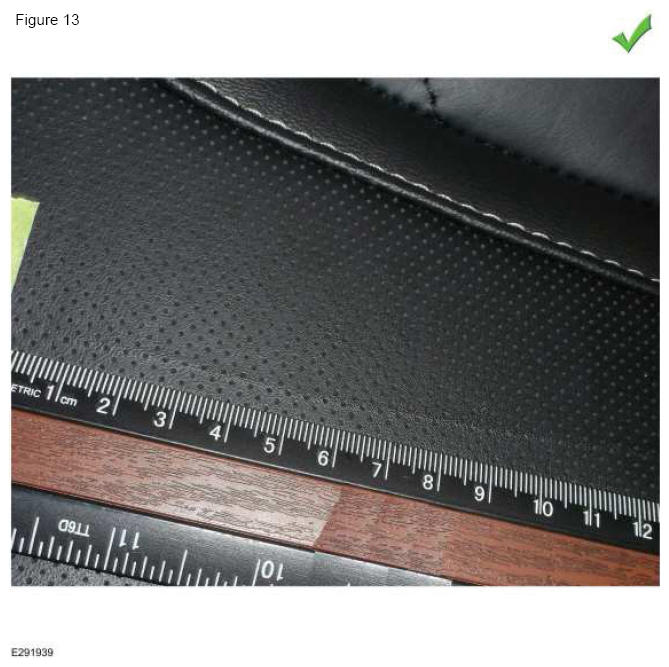
Natural leather scars/markings which exceed: 3mm x 100mm (3/32" x 3-15/16"). (Figure 13)
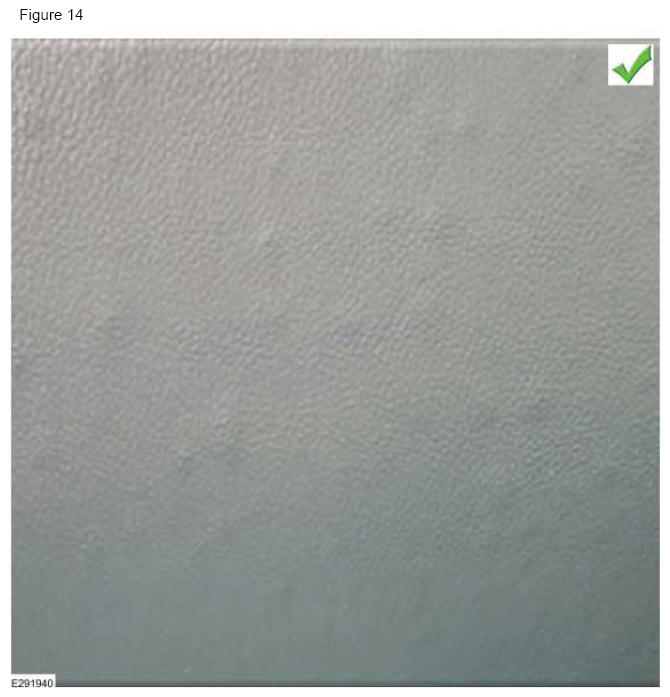
Groups of bumps or blisters (bug bites, etc.). (Figure 14)
SCARS AND NATURAL MARKINGS (NON-WARRANTABLE)
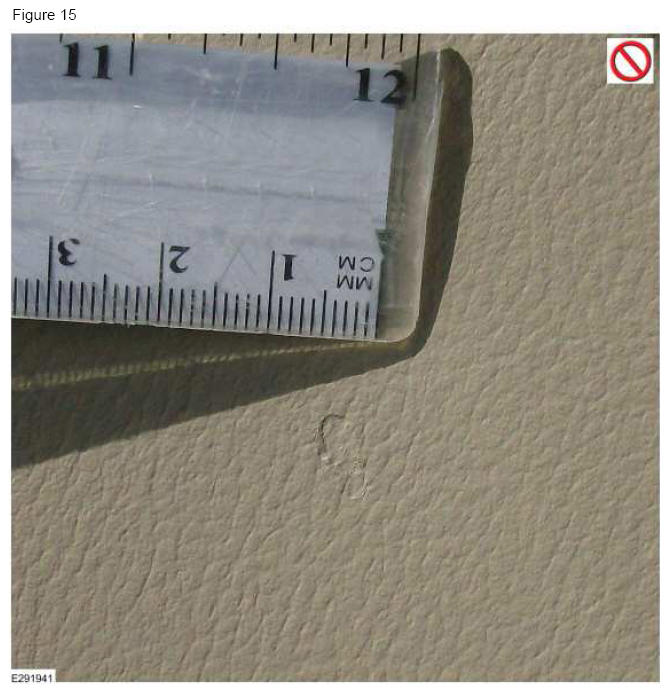
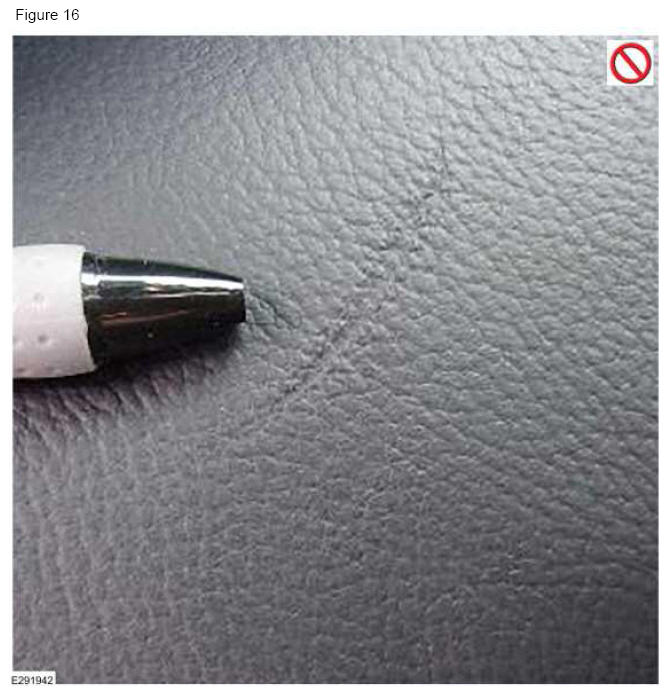
Natural leather scars/markings which are smaller than 3mm x 100mm (3/32" x 3-15/16"). (Figures 15 - 16)
PEELING FROM WEAR/REPAIR (WARRANTABLE)
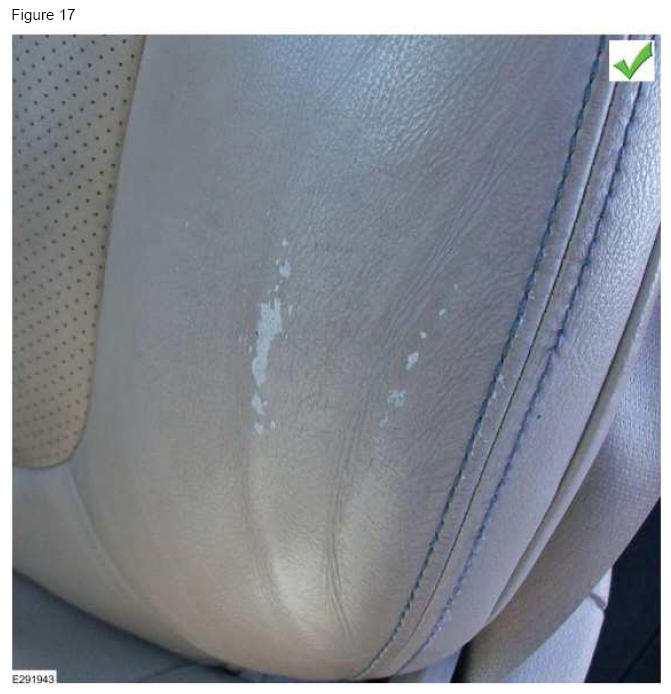
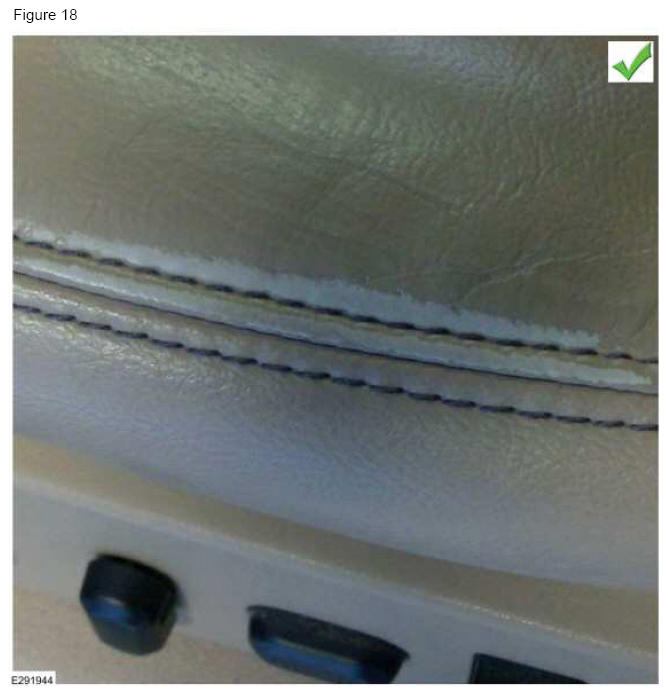
Peeling/excessive topcoat wear with leather russet seen from ingress egress wear. Typically occurs from an edge or natural character line/fold. (Figures 17 - 18)
PEELING FROM WEAR/REPAIR (NON-WARRANTABLE)
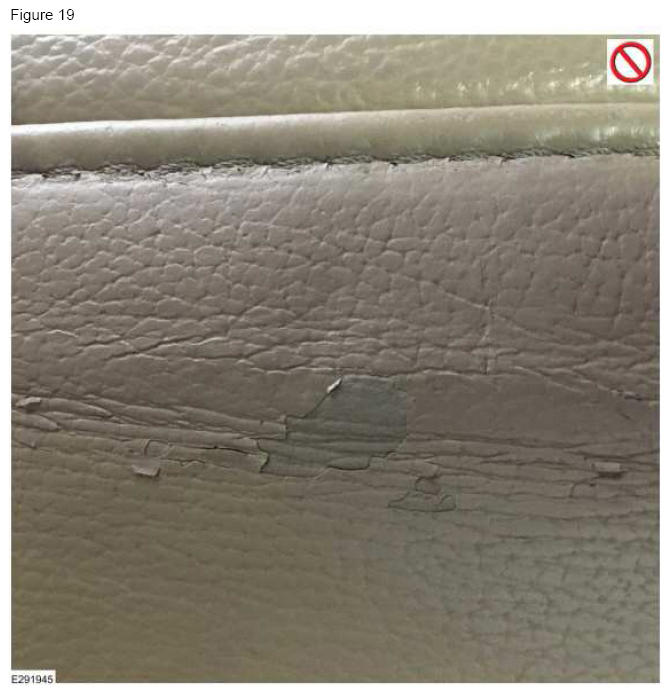
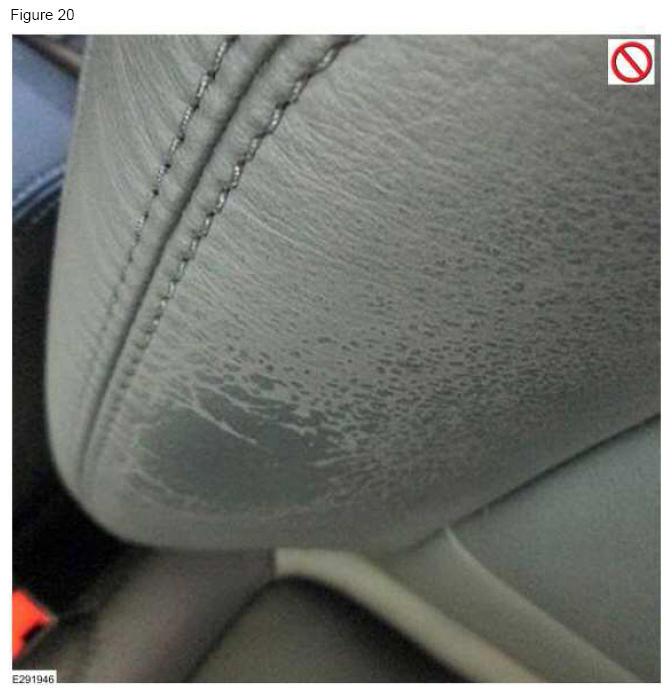
Peeling/cracking from a previous repair. This will show a lack of grain, the same color beneath or painted surrounding thread. (Figures 19 - 20)
WRINKLES (WARRANTABLE)
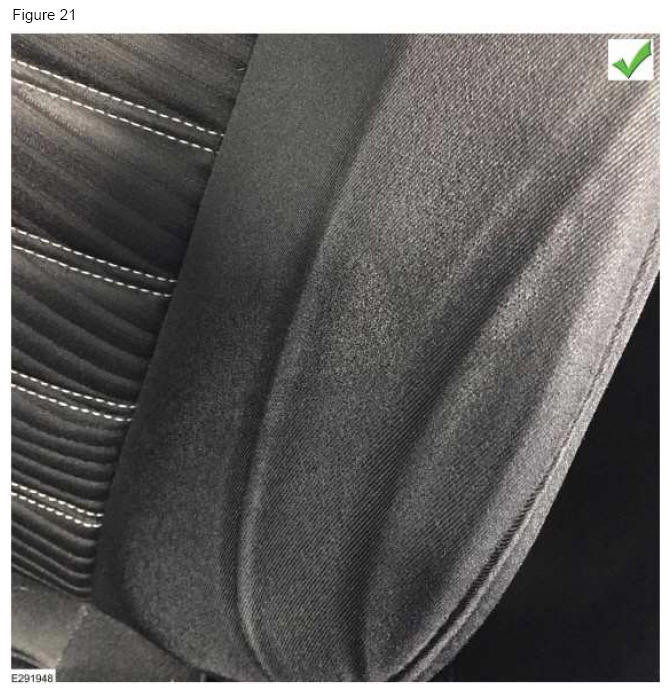
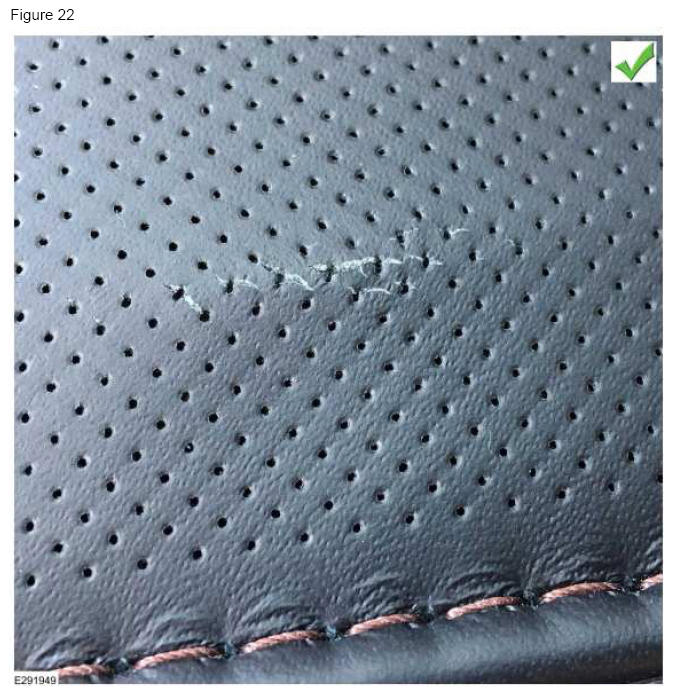
Wrinkles that bunch or crack between perforation holes. Not related to liquid damage (often seen after cover removal). (Figures 21 - 22)
WRINKLES (NON-WARRANTABLE)
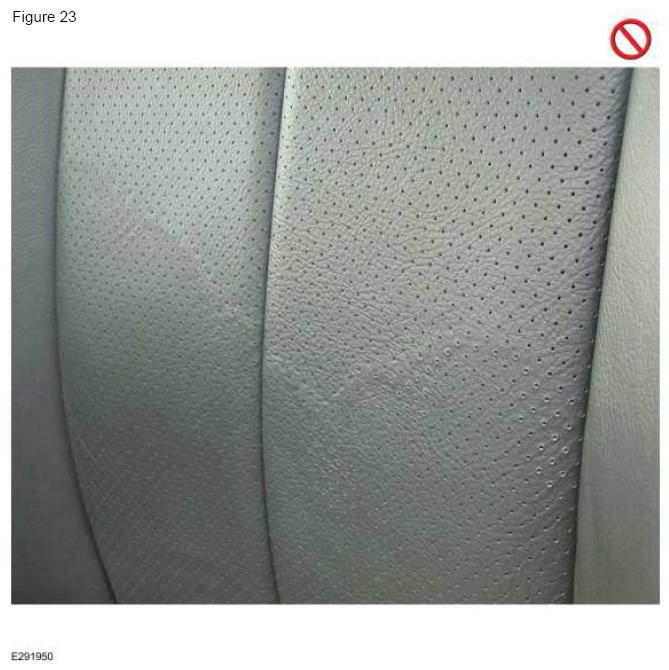
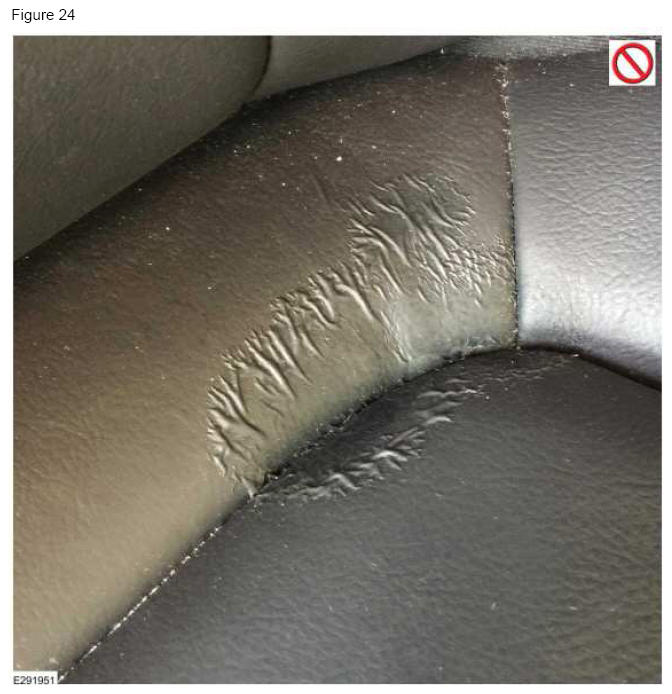
Wrinkles from liquid damage will often affect multiple panels and feel raised and/or hard. (Figures 23 - 24)
STAINS AND CHEMICAL DAMAGE (NON-WARRANTABLE)
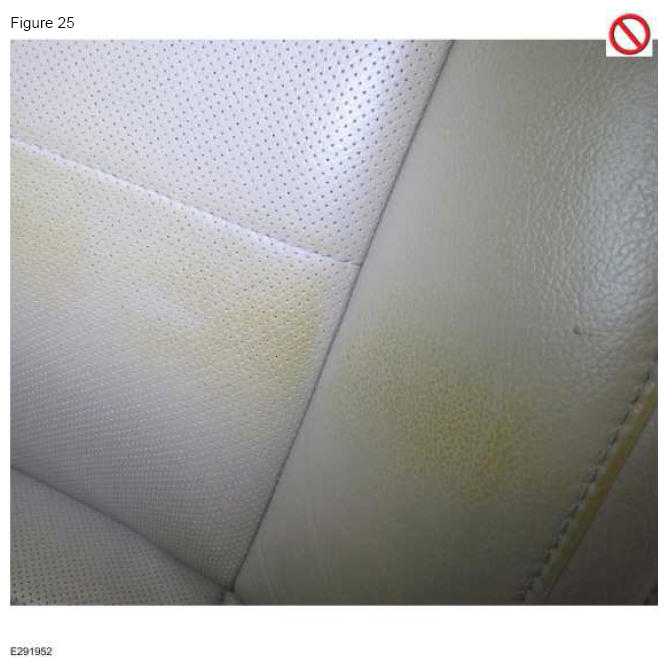
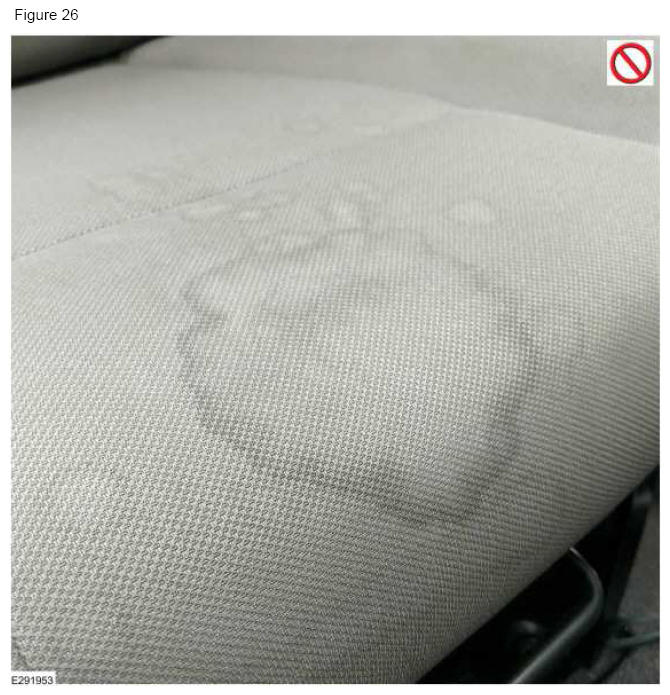
Stains or dye transfer can be darker/lighter often yellow or blue shades. (Figures 25 - 26)
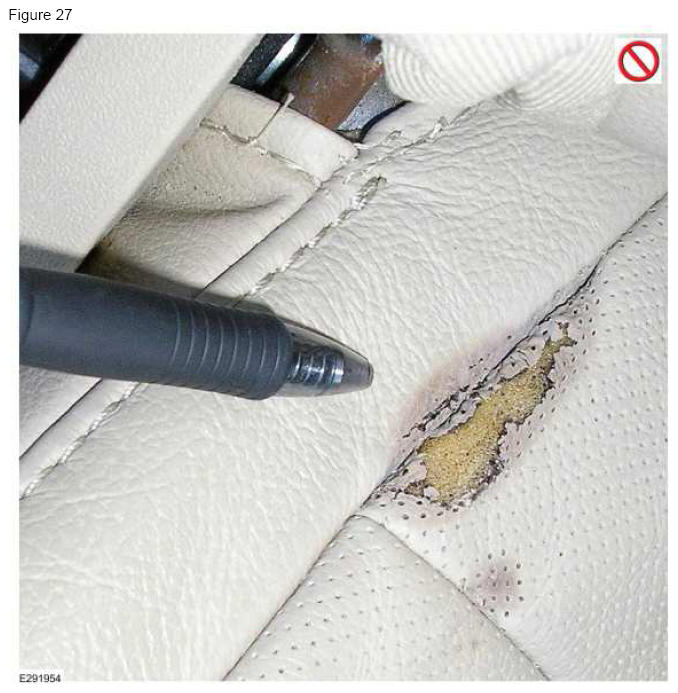
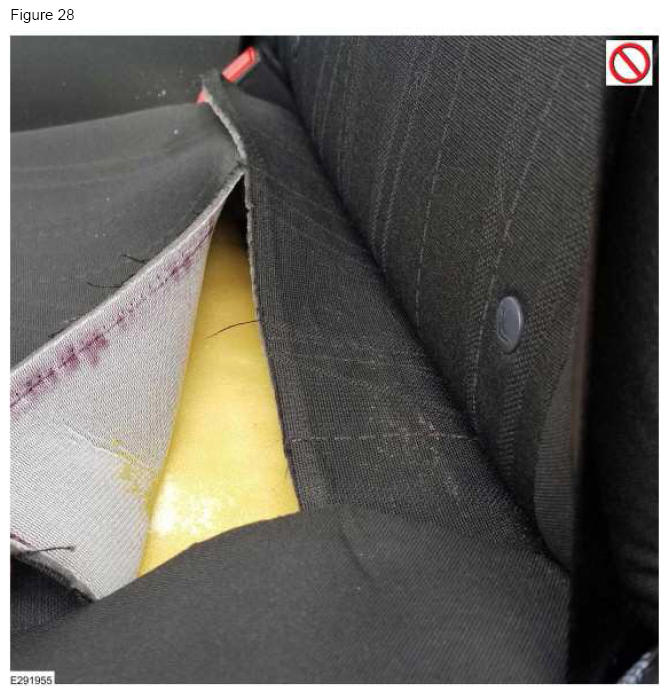
Chemical damage will discolor, dry, crack and cause brittle material. It will also dissolve thread and cause staining to seat padding. (Figures 27 - 28)
REPAIRS (WARRANTABLE)
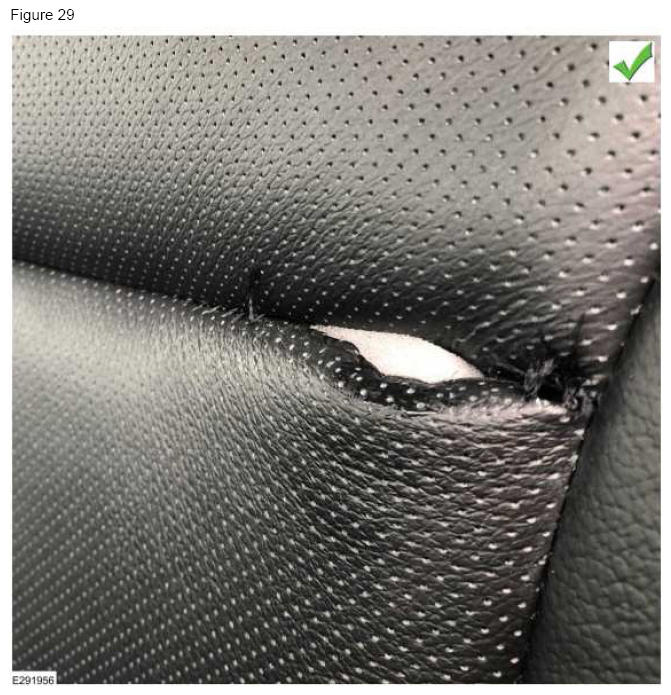
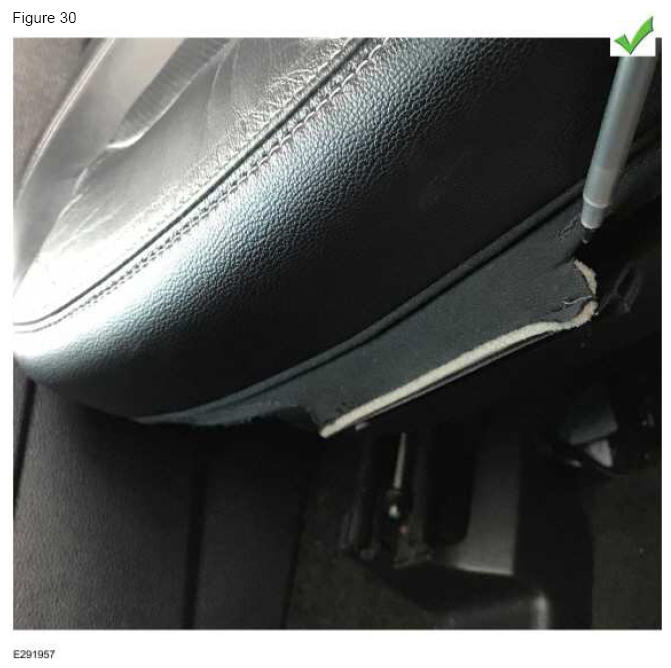
Repair split seams and detached J-clips per the Warranty & Policy Manual (see page 1 under Warrantable Repair). (Figures 29 - 30)
REPAIRS (NON-WARRANTABLE)
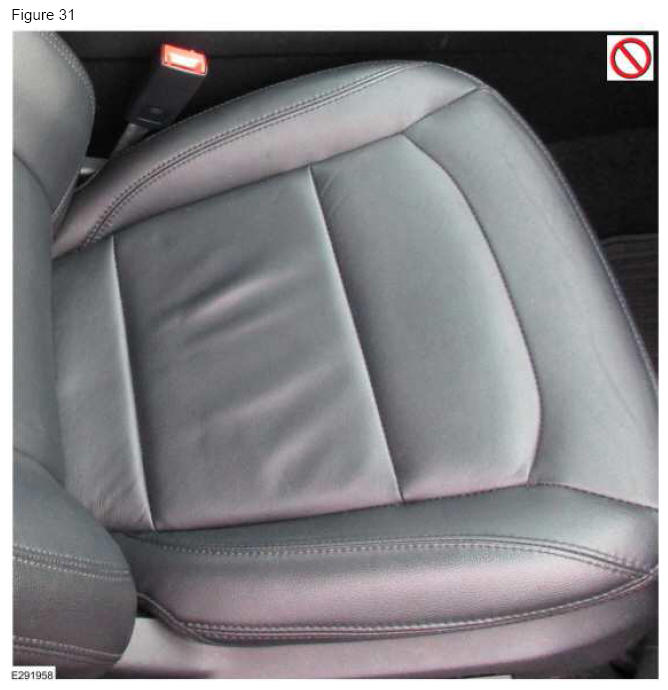
Loose center panel is a leather characteristic if not improved by removal/installation. (Figure 31)
Character lines are a characteristic of usage; may improve with cleaning/conditioning. (Figure 32)