PCV System Monitor - Naturally Aspirated Engine With MAF Sensor
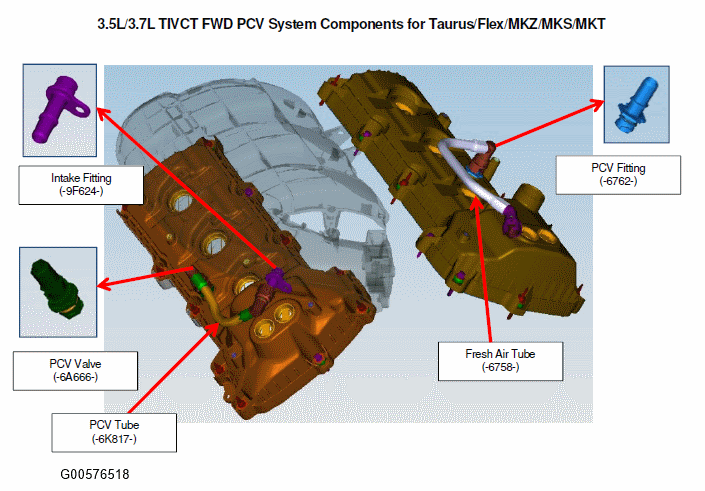
The engine crankcase contains cylinder blow by vapors which consist of combustion byproducts, unburned fuel and moisture. The PCV system is designed to evacuate these crankcase vapors so that they don't contaminate the engine oil and induct them into the intake manifold so that they can be burned in the engine. The PCV hose connects the crankcase to the intake manifold through the PCV valve which is normally mounted to the rocker cover. The fresh air hose connects the Air Induction System (AIS) to the other rocker cover (on a V engine) to provide fresh, filtered clean air into the crankcase as the crankcase vapors are evacuated. The PCV valve has a spring loaded, tapered pintle and orifice that limits the amount of crankcase vapors that are inducted into the engine. The least amount of flow occurs during idle when manifold vacuum is high. As engine load increases, manifold vacuum decreases which allow more flow. At WOT there is no flow through the PCV valve. Blow by vapors will get inducted into the AIS through the fresh air tube.
The PCV valve is installed into the rocker cover using a quarter-turn cam-lock design to prevent accidental disconnection. The PVC valve is connected to the intake manifold hose using a quick connect. The PCV tube is swedged to the valve and fittings and is not removable. Because the PCV valve has locking tabs and cannot be removed from the rocker cover without the use of special removal tools, the quick connect will be disconnected first in the event vehicle service is required. Molded nylon lines are typically used from the PCV valve to the intake manifold. The diameter of the lines and the intake manifold have been increased to 0.625" so that inadvertent disconnection of the lines after a vehicle is serviced will cause either an immediate engine stall or will not allow the engine to be restarted. In the event that the vehicle does not stall if the line between the intake manifold and PCV valve is inadvertently disconnected, the vehicle will have a large vacuum leak that will cause a Mass Air Flow equipped vehicle to run lean at idle. This will illuminate the MIL after two consecutive driving cycles and will store one or more of the following codes: Lack of O2 sensor switches, Bank 1 (P2195), Lack of O2 sensor switches Bank 2 (P2197), Fuel System Lean, Bank 1 (P0171), Fuel System Lean, Bank 2 (P0174)
The PCV valve may incorporate a heater on some applications. A heated PCV valve is shown below. The PCV valve is designed to last for the life of the vehicle and should not require servicing or replacement.