Various Vehicles - Diagnosing Turbocharger Oil And Coolant Leaks (G0000185)
WARNING: This page is about the Explorer Base, 2.0L Eng VIN 9, which is a different variant/trim than selected.
Publication date: 2024-03-14Reference number: G0000185
Supersedes refnos: 18-7068, 20-7025, 24-7022
VARIOUS VEHICLES - DIAGNOSING TURBOCHARGER OIL AND COOLANT LEAKS
TECHNICAL SERVICE BULLETIN
Reference Number(s): 24-7022, Date of Issue:
March 14, 2024
Superceded Bulletin(s): 20-7025, Date of Issue:
March 14, 2024
| FORD: | All Models |
NOTE:
This bulletin supersedes 20-7025. Reason for update: revise the vehicle model years affected
SUMMARY
This bulletin covers the diagnosis of oil and coolant leaks observed on the external and internal surfaces of the turbocharger.
SERVICE INFORMATION
Reference the following sections within the WSM. for complete information on oil and coolant leak diagnostics.
Sections 303-03 and 303-04 are engine specific.
- 303-00 Engine System/General Information/Diagnosis and Testing
- 303-03 Engine Cooling/Diagnosis and Testing
- 303-04 Fuel Charging and Controls - Turbocharger/Diagnosis and Testing
Two key notes from the WSM regarding this topic:
NOTE:
The turbocharger oil supply tube is located on the top of the turbocharger. Many leaks from the turbocharger oil supply tube will look like they are turbocharger oil leaks, as the oil will accumulate in the v-band and drip off the bottom of the turbocharger. After replacing the turbocharger oil supply tube, clean the outside of the turbocharger to avoid false diagnosis of a leaking turbocharger.
NOTE:
It is normal for a small amount of combustion gas to pass into the crankcase. This gas is scavenged into the air intake system through the PCV system, which incorporates a crankcase vent oil separator. Some engine oil, in the form of a vapor is carried into the air intake system with the blow-by gases (this engine oil also contributes to valve seat durability). This means that oil will collect inside the air intake components and the turbocharger. This is not an indication that the turbocharger oil seal has failed. The turbocharger oil seal will generally not fail unless the bearings fail first, which will cause the turbocharger to become noisy or seize. Do not install a new turbocharger due to oil inside the turbocharger or the air intake components. If a leak is detected in the oil supply or return tubes or connections, locate and rectify the source. Do not install a new turbocharger due to an oil leak.
Overview of observed oil/coolant on external surfaces of a gasoline engine turbocharger:
- Oil and coolant may be observed on the external surfaces of turbochargers. This is not an indication of a faulty turbocharger.
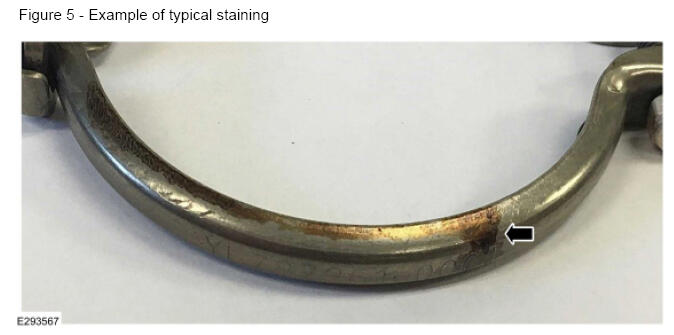
- Staining or wet oil/coolant dripping may be present on the lower point of the turbocharger v-band.
- Figures 1-2 show likely locations to observe oil or coolant.
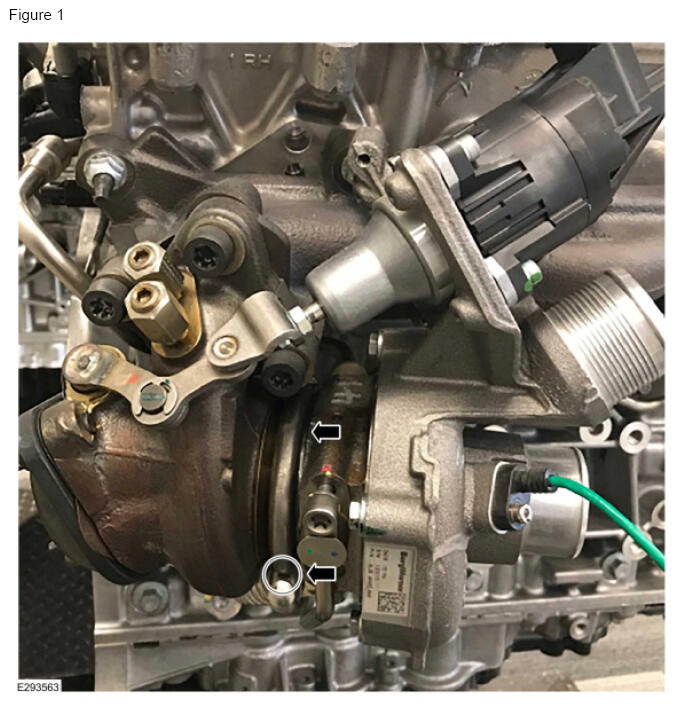
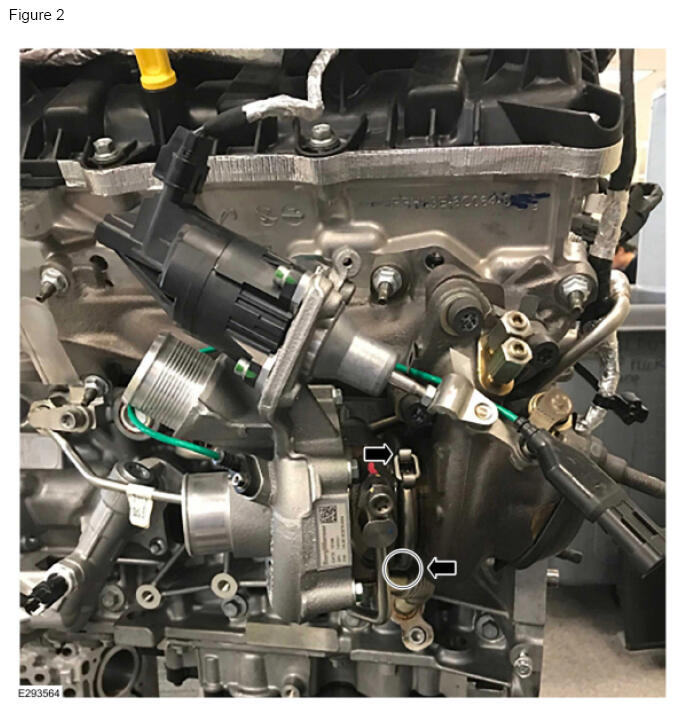
- Oil and coolant on the external surfaces of the turbocharger may come from several sources
- Turbo oil feed/drain line joints
- Turbo coolant drain/feed line joints
- Engine oil fill port drips
- Other engine sealing leaks above the turbocharger
- Any oil/coolant leaks from turbo connections/areas higher on the engine can be funneled through the v-band making it look like the turbo itself is leaking. This is not an indication of a faulty turbocharger.
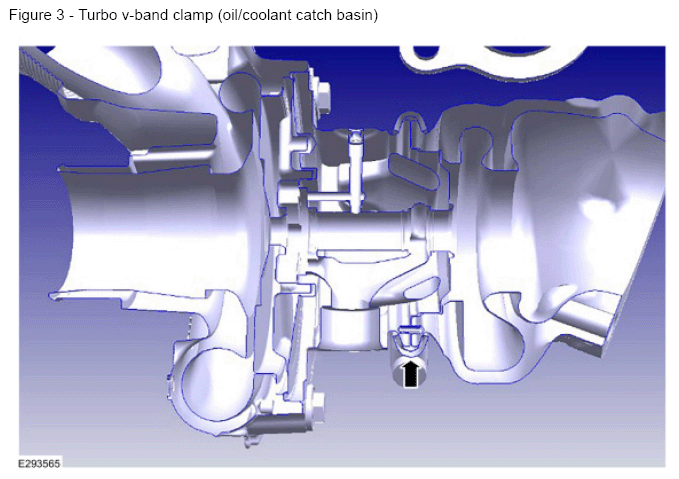
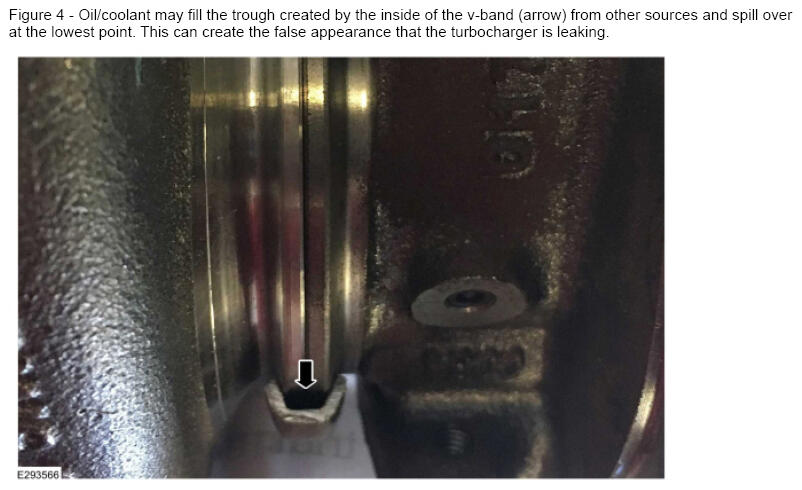
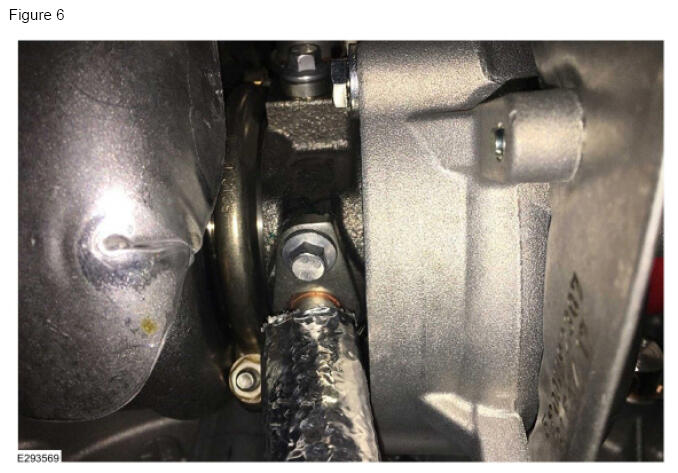
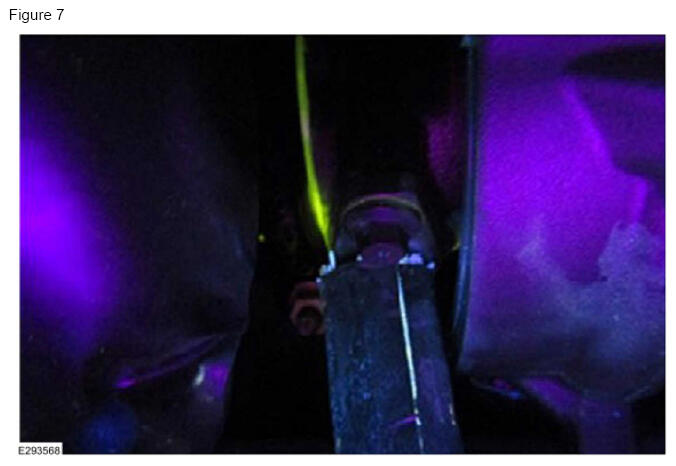
- Oil with dye in it may appear under black light on the turbocharger as a bright yellow mark. Figure 6 shows a typical indication of oil on the external surface of the turbocharger from an oil feed line leak. This is not an indication of a faulty turbocharger.
- Shown below is the same location of the turbo under normal light (Figure 6) and black light (Figure 7).
ACTIONS
- Do not replace gasoline engine turbochargers for oil or coolant leaks without first following the appropriate diagnostic procedures within the WSM.
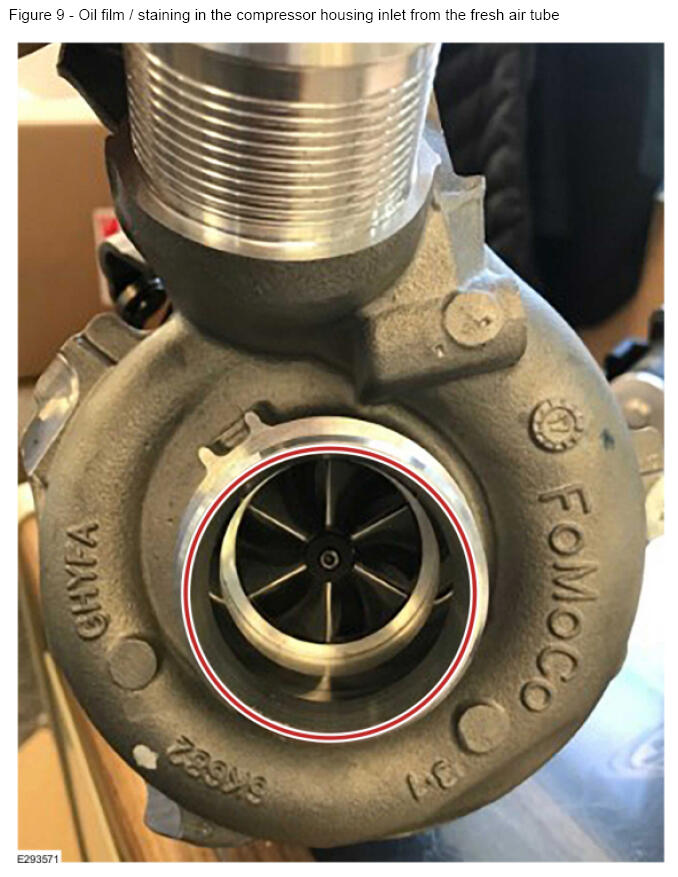
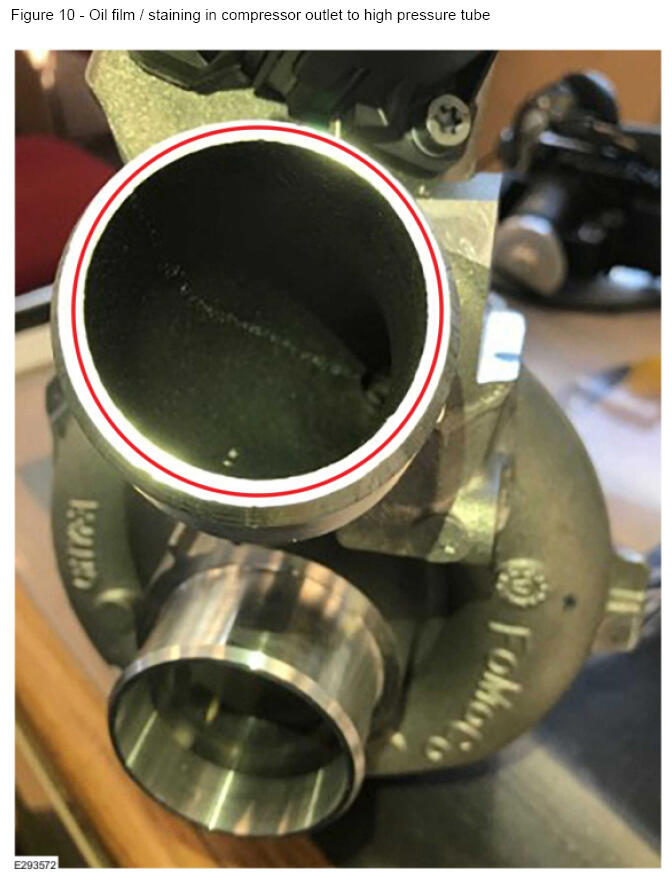
Overview of acceptable locations for oil or coolant on the internal surfaces of a gasoline engine turbocharger:
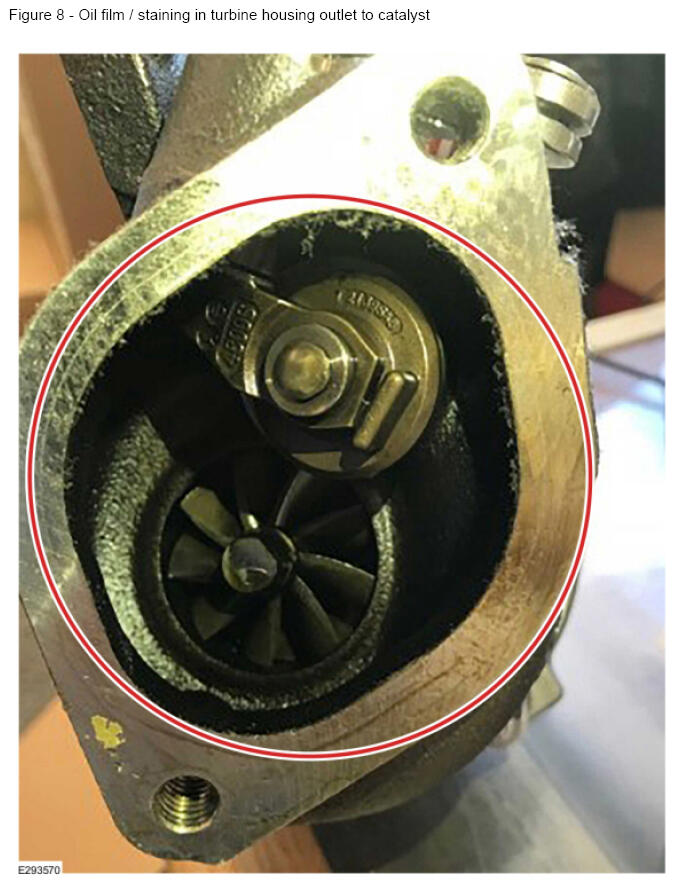
- A film of oil in the turbine or compressor housing is a normal byproduct of engine operation.
- Staining or wet oil/coolant drips may be present in the turbine outlet, compressor inlet, and compressor outlet.
- All these conditions are normal in a turbocharged engine and are not an indication of a faulty turbocharger.
Actions:
- Do not replace gasoline engine turbochargers for oil or coolant leaks without first following the appropriate diagnostic procedures within the WSM.
© 2024 Ford Motor Company
All rights reserved.
NOTE:
This information is not intended to replace or supersede any warranty, parts and service policy, workshop manual (WSM) procedures or technical training or wiring diagram information.