EGR Cooler Leak Test
multimedia:A supplement to the article is available.
- First perform a cooling system pressure test. Refer to PRESSURE TESTER METHOD .NOTE:
If the cooling system has been losing coolant and there are no external leaks showing, the Exhaust Gas Recirculation (EGR) cooler may be leaking internally.
- If the leak has not been found, using this method, it may be necessary to remove the EGR cooler and perform a bench test.
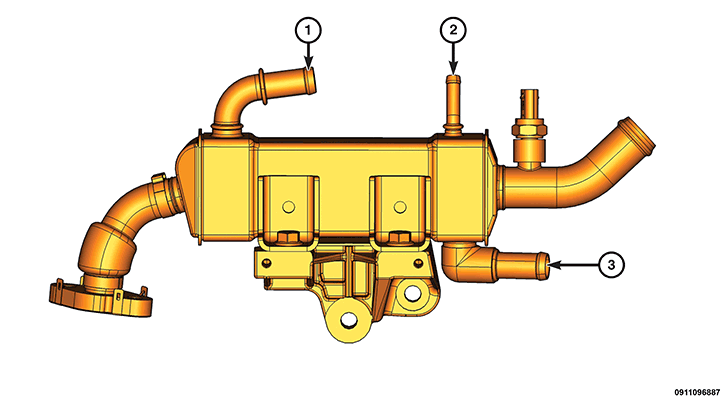
- Install a plug into the EGR cooler coolant inlet port (1) and outlet port (3).
- In the smaller inlet port (2), install the vacuum test adapter.NOTE:
The plug and the adapter must have an air tight fit to prevent misdiagnosis.
- Pump up the commercially available vacuum tool, while observing the pressure gauge, the vacuum should remain steady.
- If the EGR cooler does not hold a vacuum, the EGR cooler has an internal leak and must be replaced.
- If the EGR cooler holds vacuum, then refer to the engine internal leakage inspection. Refer to DIAGNOSIS AND TESTING .