Lamp Lens Defogging
The images used in this procedure are not specific to the vehicle, and only used to illustrate the lamps being either good or bad per the procedure.
Condensation or Fogging
Some customers may report that on occasion, vehicle exterior lamp assemblies are fogged with a light layer of condensation on the inside of the lenses. This may be reported after the lamps have been turned on and brought up to operating temperature, turned off, and then rapidly cooled by cold water (such as rain, or the water from a vehicle wash). Lens fogging can also occur under certain atmospheric conditions after a vehicle has been parked outside overnight (example: a warm humid day followed by clear cool night). This will usually clear as atmospheric conditions change to allow the condensation to change back into a vapor. Turning the lamps on will usually accelerate this process.
The headlamp shall first be examined for signs of broken or cracked exterior surfaces, and for signs that a replacement light bulb, bulb socket, or bulb access cap has not been fully locked into place. Once it has been verified that the lamp does not present any of these conditions, this test can be performed.
The verdict on whether or not the headlamp needs to be replaced is based on the following criteria:
- A lamp that exhibits condensation or fogging should be evaluated in a service bay environment by first drying all water from the outside surface of the lens and operating the lamp (power the lights) for 60 minutes.
- If the condensation or fogging has begun to clear from the lens after 60 minutes with the lamps operating, this indicates the lamp sealing has not been breached, and the lamp does not need to be replaced.
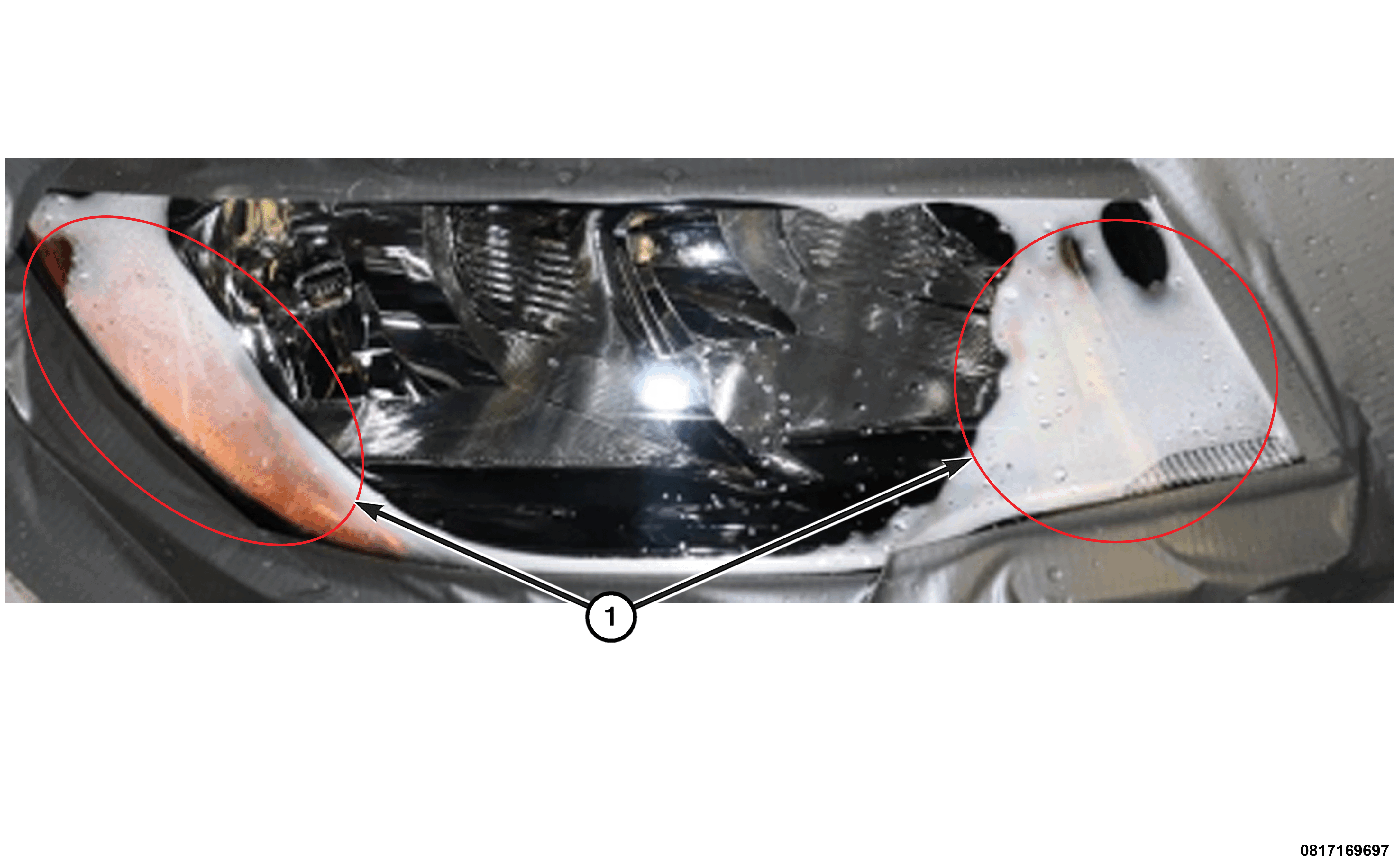
Headlamp with condensation or fogging (1) prior to test being performed.
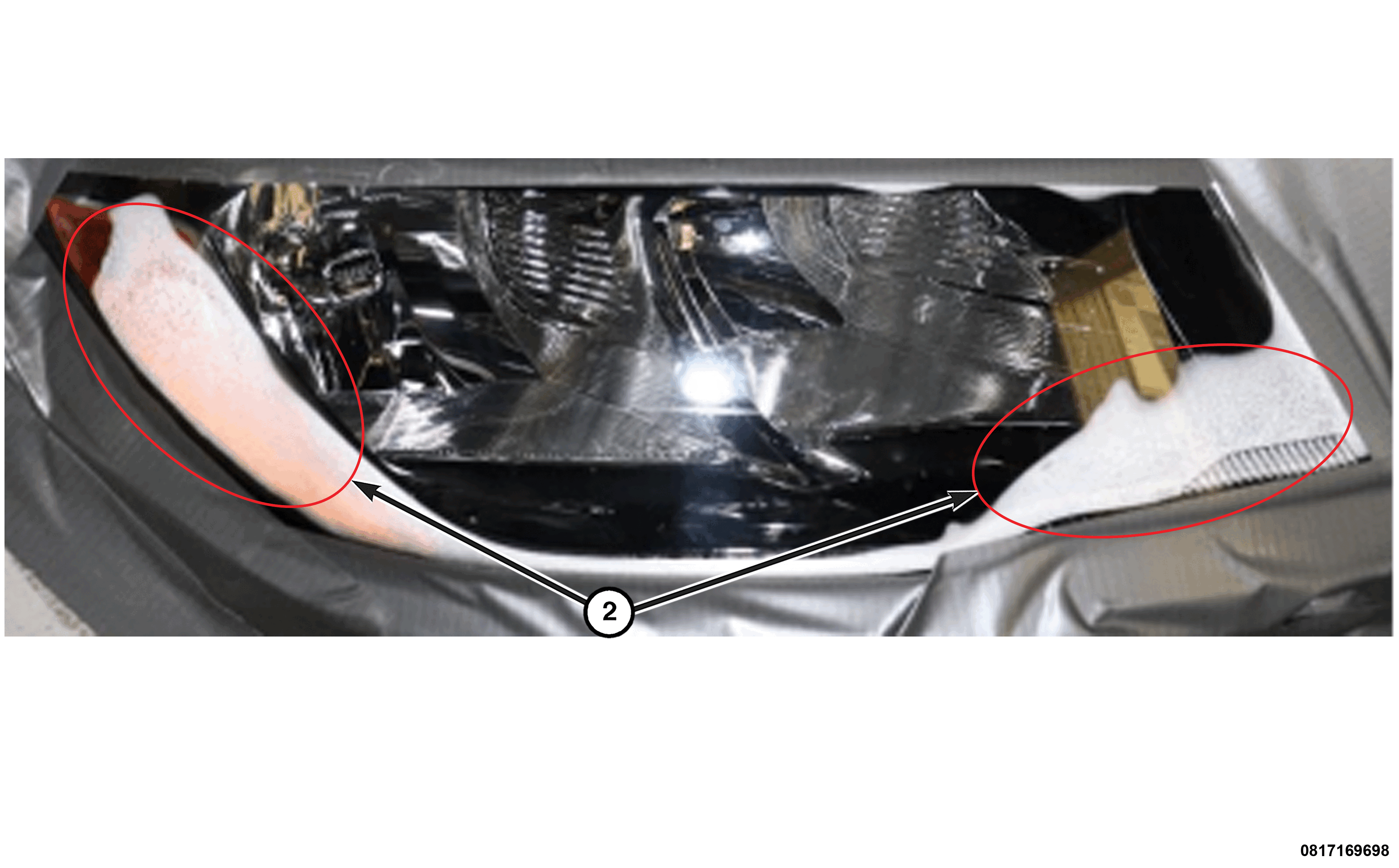
Headlamp with condensation or fogging (2) after test has been performed.
If after the test the headlamp indicates a reduction of condensation or fogging area on the lens, this indicates the headlamp remains waterproof and the headlamp venting system will eventually dissipate all the condensation or fogging. This is an expected (natural) behavior and the headlamp does not need to be replaced.
Total clearing time may take several hours depending on the temperature and humidity of the air surrounding the vehicle.
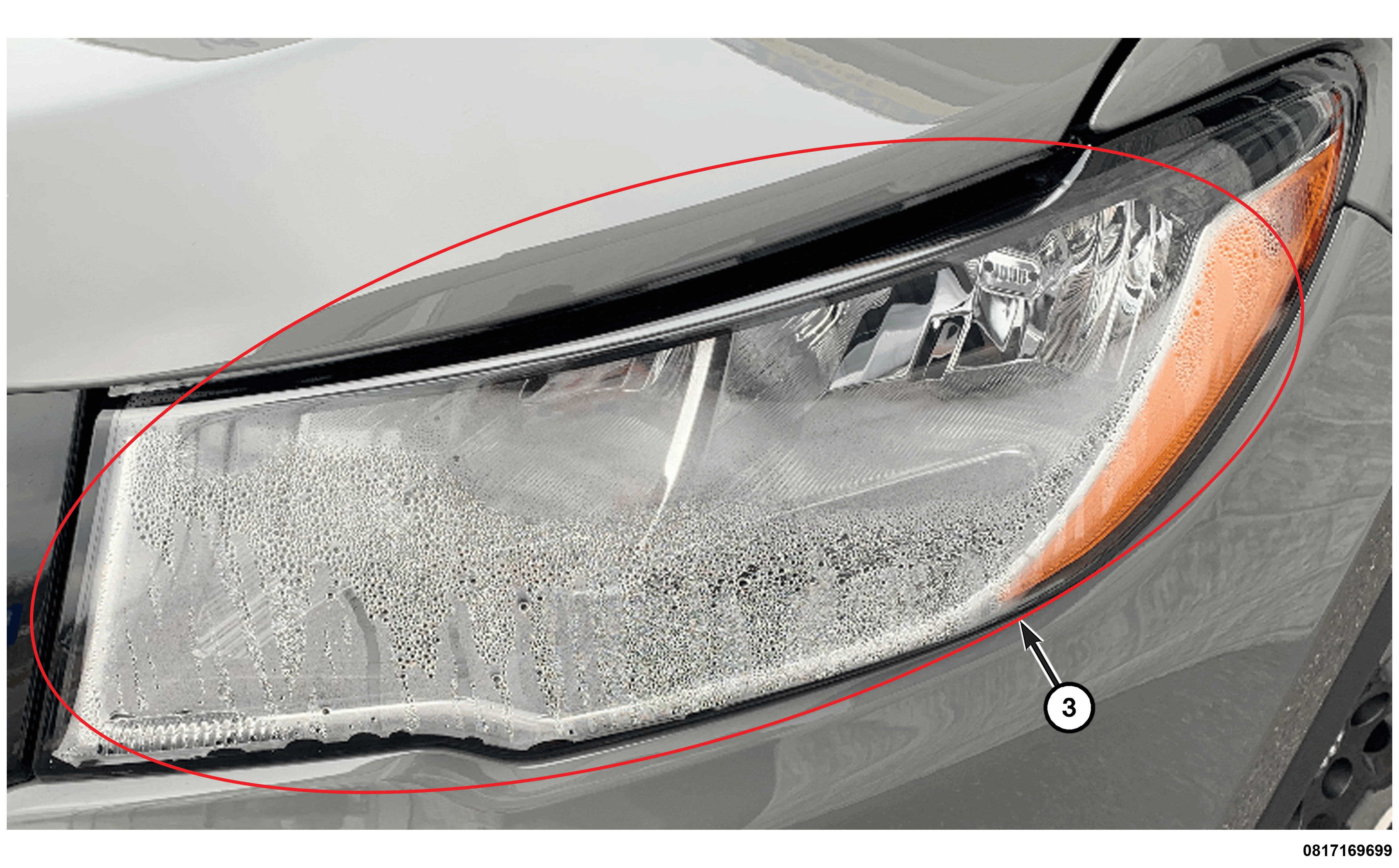
Headlamp with water droplets (3).
If the condensation or fogging has not begun to clear after 60 minutes with the lamps operating, or the lamp has large amounts of water droplets (3) visible on most internal surfaces, this indicates a problem with the lamp sealing that has allowed water to enter the lamp. In this instance, the customer is also likely to report that moisture in the lamp is always present and never disappears. A lamp that exhibits internal moisture permanently should be replaced.